Rudyard Kipling"
“When you're left wounded on Afganistan's plains and
the women come out to cut up what remains, Just roll to your rifle
and blow out your brains,
And go to your God like a soldier”
General Douglas MacArthur"
“We are not retreating. We are advancing in another direction.”
“It is fatal to enter any war without the will to win it.” “Old soldiers never die; they just fade away.
“The soldier, above all other people, prays for peace, for he must suffer and be the deepest wounds and scars of war.”
“May God have mercy upon my enemies, because I won't .” “The object of war is not to die for your country but to make the other bastard die for his.
“Nobody ever defended, there is only attack and attack and attack some more.
“It is foolish and wrong to mourn the men who died. Rather we should thank God that such men lived.
The Soldier stood and faced God
Which must always come to pass
He hoped his shoes were shining
Just as bright as his brass
"Step forward you Soldier,
How shall I deal with you?
Have you always turned the other cheek?
To My Church have you been true?"
"No, Lord, I guess I ain't
Because those of us who carry guns
Can't always be a saint."
I've had to work on Sundays
And at times my talk was tough,
And sometimes I've been violent,
Because the world is awfully rough.
But, I never took a penny
That wasn't mine to keep.
Though I worked a lot of overtime
When the bills got just too steep,
The Soldier squared his shoulders and said
And I never passed a cry for help
Though at times I shook with fear,
And sometimes, God forgive me,
I've wept unmanly tears.
I know I don't deserve a place
Among the people here.
They never wanted me around
Except to calm their fears.
If you've a place for me here,
Lord, It needn't be so grand,
I never expected or had too much,
But if you don't, I'll understand."
There was silence all around the throne
Where the saints had often trod
As the Soldier waited quietly,
For the judgment of his God.
"Step forward now, you Soldier,
You've borne your burden well.
Walk peacefully on Heaven's streets,
You've done your time in Hell."
A soldier's harrowing memoir of service to country By Commander S THAYAPARAN (Retired) Royal Malaysian Navy
Wednesday, August 20, 2025
Malaysiakini : My platoon commander said, “Sir, the operations officer told me not
to follow your orders and not to return fire if fired upon the patrol,
that they are all our saudara (relations by virtue of them being Muslims).”
- Somalia (Chapter 56 - World food programme)
COMMENT
| The quote that opens this review happens towards the end of Major D
Swami Gwekanandam’s (henceforth the major) career in the crucible, which
was Somalia.
The quote exemplifies “the orang kita”
mentality, which crept into the armed services and demonstrates how
destructive this agenda is to the Malaysian security forces. The fact
that it came from a convert is even more depressing.
Readers
will discover this and much more in a memoir which can only be
described as Dickensian in its portrayal of social order and Kubrickian
in its depiction of warfare and military dysfunction.
This is a
politically incorrect memoir. The major not only highlights the systemic
racial dysfunction in the army but also does not spare himself from
scrutiny. Being a good officer does not mean you are a civilised man.
There
will be chapters where readers wonder about the self-destructive
behaviour of the major when it comes to playing the corporate and racial
game, but always, what remains is the major’s devotion to his men under
his command.
There are no heroes or villains in this memoir, only men shaped by the system and propaganda they serve.
Retired
major general Toh Choon Siang writes in a forward that this “is not
meant for faint-hearted readers” and rightly claims that this book
should be “…. essential reading for all junior officers engaged in
tactical-level command and leadership training.
It offers valuable lessons on pertinent leadership traits, particularly on moral and physical courage.”
A grunt’s eye view
Lieutenant
Colonel Ivan Lee, a comrade of the major’s, and readers will discover a
mercurial character in his own right, writes of the man who is known as
“the Legend” - “Whether deep in the jungles of West Malaysia, Sarawak,
or Somalia, Major D Swami performed his duty to the best of his ability
and bravery to lead men into battle. He is the man you want by your side
when bullets start flying.”
You have not read a memoir like this
from former service personnel. This is not a hagiography or
propagandistic narrative of service to the country.
This is a
memoir of the toll genuine patriotism takes on men who define it as
brotherhood and not as devotion to political parties and empty slogans.
This
is a grunt’s eye view of the army and its racial and class dysfunction,
and a snapshot of what it means to come from a disenfranchised
background but still serve your country.
Unlike
many memoirs from local service personnel, who attempt to aggrandise
service to king and country, the major’s narratives are extremely
humanistic accounts of the people who exploit the system and those who
are there to genuinely do their job.
You
have to understand, when the major uses the word “commie”, for
instance, he uses it not as some sort of partisan buzzword but rather
from real experience fighting against combatants who were using violence
not only on soldiers but also on civilians.
There are not only
descriptions of jungle warfare and the training that preceded it, but
also of how soldiers behave on the battlefield.
The fear, paranoia, and yes, at times, cowardice are on full display in these battlefield narratives.
All
this is related in the Major’s hyper frenetic prose, which strangely
enough delivers a value judgment but also empathy at the same time.
There are elements of body horror in this memoir which would not be out of place in a David Cronenberg film.
The
major graphically describes battlefield injuries, scenes of carnage,
banal brutality, and grotty episodes of jungle life, like removing ticks
from one’s genitals.
Non-Malays in the military
Readers
will discover that besides the adrenaline-filled passages of jungle and
city warfare, there is also the most fearsome of creatures, the
military’s bureaucracy, to contend with.
There are narratives of
skullduggery that would make corporate politics look tame, and this is
where readers will actually see how non-Malay officers often play out
their brethren for rewards of promotions and business opportunities
after service.
Indeed, reading this memoir, you will discover how
non-Malays are their own worst enemy, which is the aim of the system, I
suppose.
Beginning with his life in a large, boisterous family on
an estate, recollections of youthful capers are clouded by the shadow of
war and occupation. It would seem that the major was always haunted by
the aftermath of violence, either through war or anarchy.
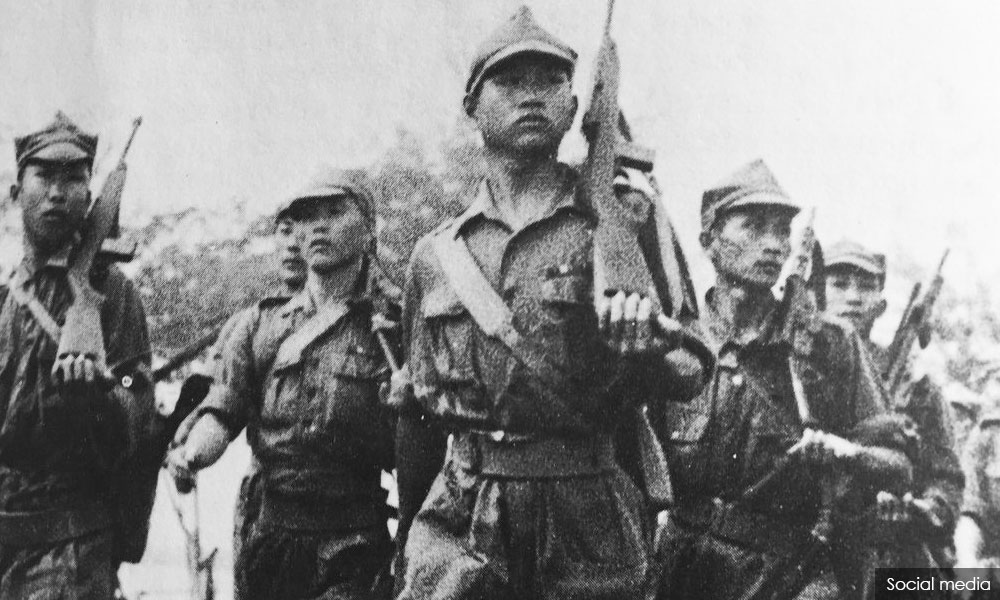
The
former was when his father, who was with the Malayan People’s
Anti-Japanese Army (MPAJA), was caught and tortured by the Kempeitai for
smuggling medical supplies - “When he came home, he was like a
skeleton. My Mum was terrified looking at him.”
The MPAJA
The
latter, when his father was attacked with changkols and machetes by
workers who “were pissed off with the white manager” - “Blood was
everywhere. I took a sneak peek, as no one was allowed in. The space
around my dad was covered. I saw Mr Kittu busy dabbing at my dad’s
wounds.”
Joining the army as a grunt from an ethnic minority
working class demanded acceptance of racism and petty cruelty - “We
Indians were constantly denigrated. We just had to suck it up. We were
outnumbered and could get killed.
“They referred to all Indians
as Hindus, regardless of their faith. They used the word Hindu on us.
The way they used the word Hindu made it sound like a dirty word.”
You
will discover how racism and discipline shaped an officer from the
other ranks, but also how compassion and brotherly love ensured that the
men the major led served their country by honouring the kinship men
formed in severe circumstances.
A second family
Here’s
the thing about the major’s narrative: it is punctuated with hijinks,
camaraderie and the pure joy of being alive in horrendous situations.
The
major describes anarchic moments of joy and friendships between
soldiers of various races. He notes that with the rise of religious
fervour in the armed forces, it has destroyed the bonds of fellowship
between warriors.
The major describes how tradecraft from the
various branches of the army collide with the reality of on-ground
operations. He describes but never fetishises the instruments of war and
the men who use them.
What readers will be dealing with is an unvarnished, oftentimes vulgar look into how soldiers behave on and off duty.
A good soldier compartmentalises. The major has two families. The one at home and the one he served with.
Throughout
this book, you will discover that the devotion to the former bled into
the latter. The major makes it very clear that you have to love the men
you serve with if the desired outcome is loyalty, service, and
sacrifice.
On a personal note, I have met many men who served with
and under the major who are sometimes moved to tears for the respect
and devotion he showed them.
All of them said this of the major,
there was nothing he would not do for them, even if it meant throwing
himself at enemy fire if it bought them more time.
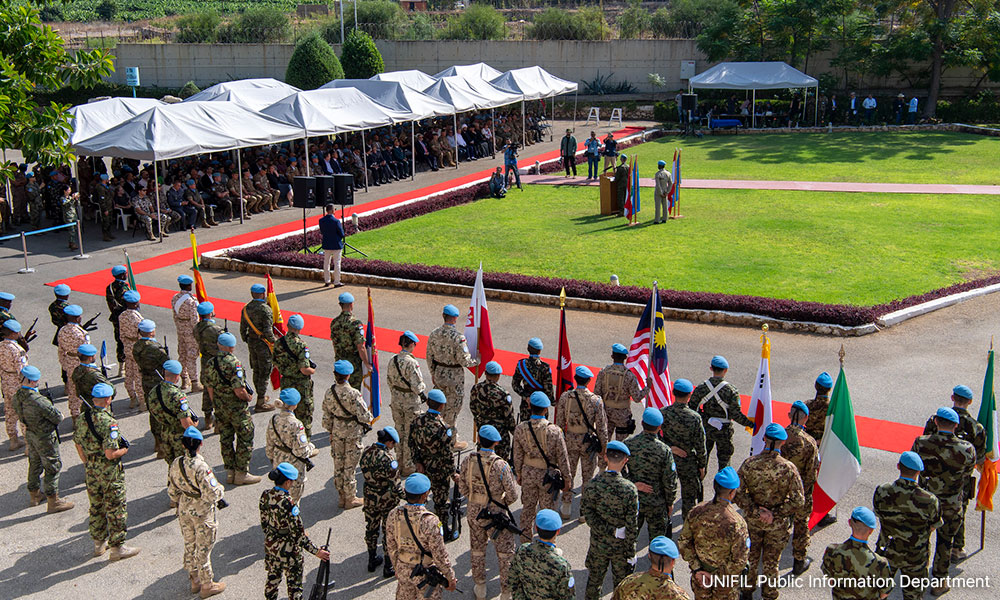
One of the more heart-wrenching chapters of the book deals with the major’s experience in Somalia.
When kindness kills
Thankfully,
this happens towards the end of the book, where the major has become
the kind of leader that the army unwittingly forged.
The chapters
on Somalia are the most difficult to read. The major’s description of
the attitude of soldiers, local and foreign, aid agencies and
governments is eye-opening, dispelling the romanticised Hollywood
versions of these moments in history.
The major describes the world as something that is not how he wishes it to be.
This
bit is especially heartbreaking - “My soldiers and I know it’s taboo to
toss food to children. The last time my soldiers did that was when the
main body of the 7th Mech arrived in January 1994.
“I was there
earlier on Dec 15, 1993. There was a commotion when the package was
fought over, and one of them got it. The children started running,
chasing after the child with the package, all of them disappearing over a
huge mound of garbage.
“What was left was a weaker child; he was
stabbed in the stomach and left to die for a package thrown by us with
good intentions. A bloody stupid act of pity and compassion, wrong time,
wrong place. Food thrown with good intentions in Somalia can kill.”
A
postscript reveals the major ensconced in the light of his loving
family. He is still fuelled by righteous anger. His body is failing him
after years of arduous service, but his family and comrades are the
reward for serving his country.
He built a life despite serving a
system that failed him and could have called on him to make the ultimate
sacrifice. This is what it means to be a “Non” in this country.
For
veterans who have served in the armed services of their country, Major
Swami is a reminder that the gods of war create natural-born soldiers.







Write more on any topic of your choosing!