The Fighting 7th, while there is life there is fight !!!...On War, Politics and Burning Issues
Pages
▼
Thursday, May 23, 2024
Our apartheid academy, UiTM By Andrew Sia
Malaysiakini : COMMENT | What is UiTM? Is it Universiti Teknologi Mara? Or should it be renamed as Universiti Tempat Melayu? I had Malay colleagues who studied at UiTM when working at The Star newspaper. We got along just fine. One
fellow went on to work for the DAP. Another told me he preferred to
stay in a Chinese area to avoid nosy neighbours reporting on him
bringing his girlfriend home.
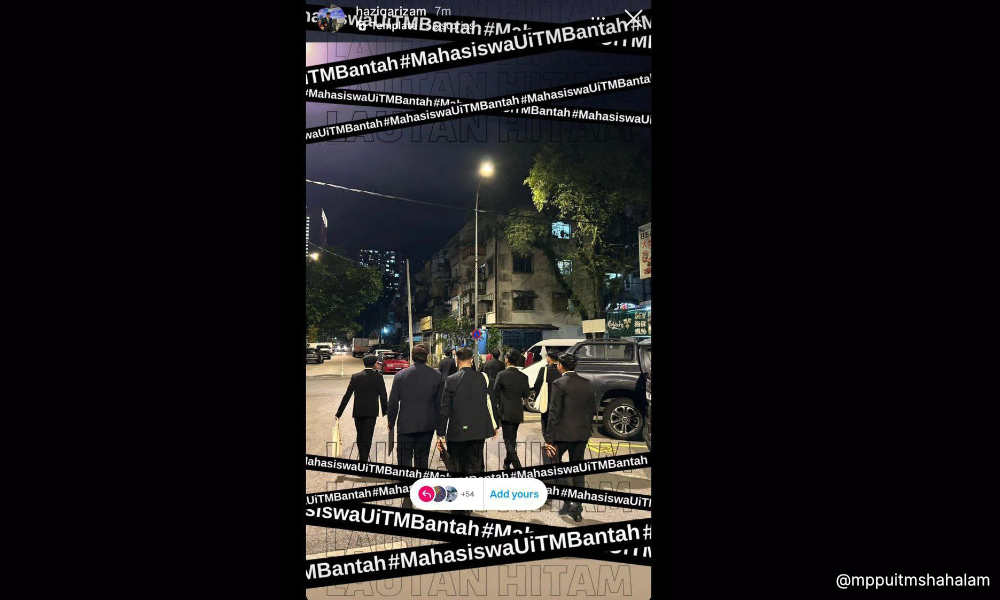
However, students there recently
wore black to protest very few non-Malays being admitted into a small
UiTM post-graduate programme for cardiothoracic surgery.
It was to address the “acute shortage” of such specialists, as Malaysian Medical Association president Dr Azizan Abdul Aziz pointed out.
Yet,
the student protesters were basically saying, “We don't care about the
medical needs of the people, even the Malays. We're clinging to our
racial thinking no matter what.”
What an “educated” bunch they are.
As Lawyers for Liberty director Zaid Malek
said, “The availability of surgeons could mean the difference between
life and death to the public, whether they are non-bumiputera or
bumiputera.”
A brief history.
The affirmative action program began as the New Economic Policy (NEP) in 1970, after the bloody race riots following the May 1969 elections when the ruling coalition came close to losing its two-thirds majority. The NEP’s two main objectives were to eradicate poverty regardless of race and to eliminate the identification of race with economic function.
This made sense at the time because 49 per cent of the population in Peninsular Malaysia lived in poverty and the vast majority were rural Malay farmers. Means testing would have been a useful addition to the policy program even then but may have proved largely redundant given the prevailing socioeconomic conditions.
The NEP ran for 20 years, and by 1990 poverty had tumbled to just 17 per cent. Bumiputra corporate share ownership also rose sharply from 1.5 per cent to 18 per cent (though this was still below the target of 30 per cent). The NEP was reincarnated as the National Development Policy, and although it focussed more generally on issues of growth and industrialisation, the race-based policies not only remained but grew in number and significance.
And there was still no means of testing, despite the growing numbers of middle-class and affluent Bumiputras.
Even though the affirmative action program has become so extensive and entrenched over the decades, most Bumiputras have not realised much benefit from it — but a tiny minority have enjoyed superlative gains.
When unveiling his New Economic Model in 2012, former prime minister Najib Razak noted that ‘it is time to review its implementation’ to make the program ’market-friendly, merit-based, transparent and needs-based’. Even Prime Minister Mahathir Mohamad has recognised its failings: ‘the protection and privileges accorded by the NEP may weaken the Malays further by lulling the next generation into complacency’.
Therefore, what happens next?
The affirmative action program has failed its focus group while marginalising everyone else in the process. Rather than increasing social cohesion, it has contributed to disunity. As a result, Malaysia’s skilled labour and capital have tended to migrate overseas, compounding the costs of affirmative action.
Maintaining social harmony in a multi-racial community calls for striking a delicate balance between society and meritocracy. The problem in Malaysia is that the balance has moved too far away from meritocracy and requires rebalancing.
Thus, our apartheid system, in which even the young students had been indoctrinated as these UiTM students.
Another way why we face this apartheid in this country is to excise from the minds of a significantly large section of our people the toxic and ill-founded belief that Malaysia belongs to people of only one race and religion and the rest should content themselves with being second-class citizens.
Unfortunately, the political forces who believe in the secular and democratic ideals of Malaysia, “simply don’t grasp this”.
Opportunism has always been an ingredient of politics. But the “real and grave danger”, is the propensity of some political forces in Malaysia to strike a “Faustian bargain” with the Ketuanan and Islamisation project rather than directly confronting it.
The apartheid system is here to stay!
I do not aim to please anyone. This is my blog, there is no blog like this. I am not mainstream. Read my disclaimer before posting comments and threatening me. Not to worry, I will not quiver in my boots. If you are not happy, no problem, just take a hike!!

No comments:
Post a Comment
I do not aim to please anyone. This is my blog, there is no blog like this. I am not mainstream. Read my disclaimer before posting comments and threatening me. Not to worry, I will not quiver in my boots. If you are not happy, no problem, just take a hike!!