Rudyard Kipling"
“When you're left wounded on Afganistan's plains and
the women come out to cut up what remains, Just roll to your rifle
and blow out your brains,
And go to your God like a soldier”
General Douglas MacArthur"
“We are not retreating. We are advancing in another direction.”
“It is fatal to enter any war without the will to win it.” “Old soldiers never die; they just fade away.
“The soldier, above all other people, prays for peace, for he must suffer and be the deepest wounds and scars of war.”
“May God have mercy upon my enemies, because I won't .” “The object of war is not to die for your country but to make the other bastard die for his.
“Nobody ever defended, there is only attack and attack and attack some more.
“It is foolish and wrong to mourn the men who died. Rather we should thank God that such men lived.
The Soldier stood and faced God
Which must always come to pass
He hoped his shoes were shining
Just as bright as his brass
"Step forward you Soldier,
How shall I deal with you?
Have you always turned the other cheek?
To My Church have you been true?"
"No, Lord, I guess I ain't
Because those of us who carry guns
Can't always be a saint."
I've had to work on Sundays
And at times my talk was tough,
And sometimes I've been violent,
Because the world is awfully rough.
But, I never took a penny
That wasn't mine to keep.
Though I worked a lot of overtime
When the bills got just too steep,
The Soldier squared his shoulders and said
And I never passed a cry for help
Though at times I shook with fear,
And sometimes, God forgive me,
I've wept unmanly tears.
I know I don't deserve a place
Among the people here.
They never wanted me around
Except to calm their fears.
If you've a place for me here,
Lord, It needn't be so grand,
I never expected or had too much,
But if you don't, I'll understand."
There was silence all around the throne
Where the saints had often trod
As the Soldier waited quietly,
For the judgment of his God.
"Step forward now, you Soldier,
You've borne your burden well.
Walk peacefully on Heaven's streets,
You've done your time in Hell."
What Was It Really Like to Be a Slave in Muslim Algiers? - The Christian Slave Who Became One of Europe's Greatest Writers
Monday, September 07, 2026
The Western Spirit : Did you know that Miguel de Cervantes, the man who wrote Don Quixote, spent five years as a slave in Muslim Algiers?
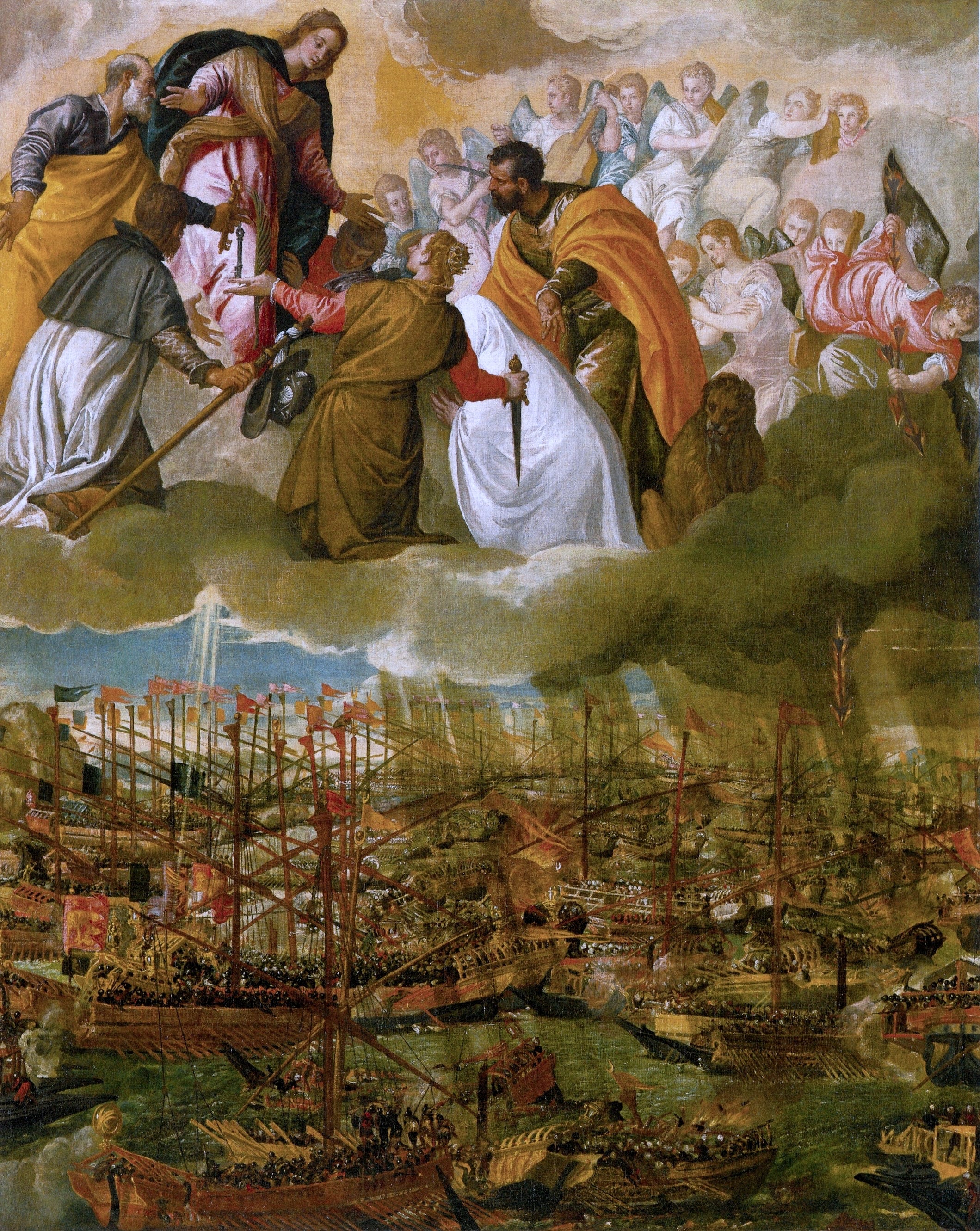
Four years earlier, he fought at the Battle of Lepanto (a super important victory for Christendom), where the fleet of the Holy League confronted the Ottoman navy on October 7, 1571.
Cervantes got shot multiple times, and permanently lost the use of his left hand. He was incredibly proud of having fought there, later describing Lepanto “as one of the great events of his life”.
The Battle of Lepanto by Paolo Veronese
Then, in 1575, while sailing back toward Spain, his ship was attacked by Algerian corsairs.
They captured him and took him across the Mediterranean to Algiers.
For the next five years, he lived as a slave awaiting ransom…
From Lepanto to Algiers
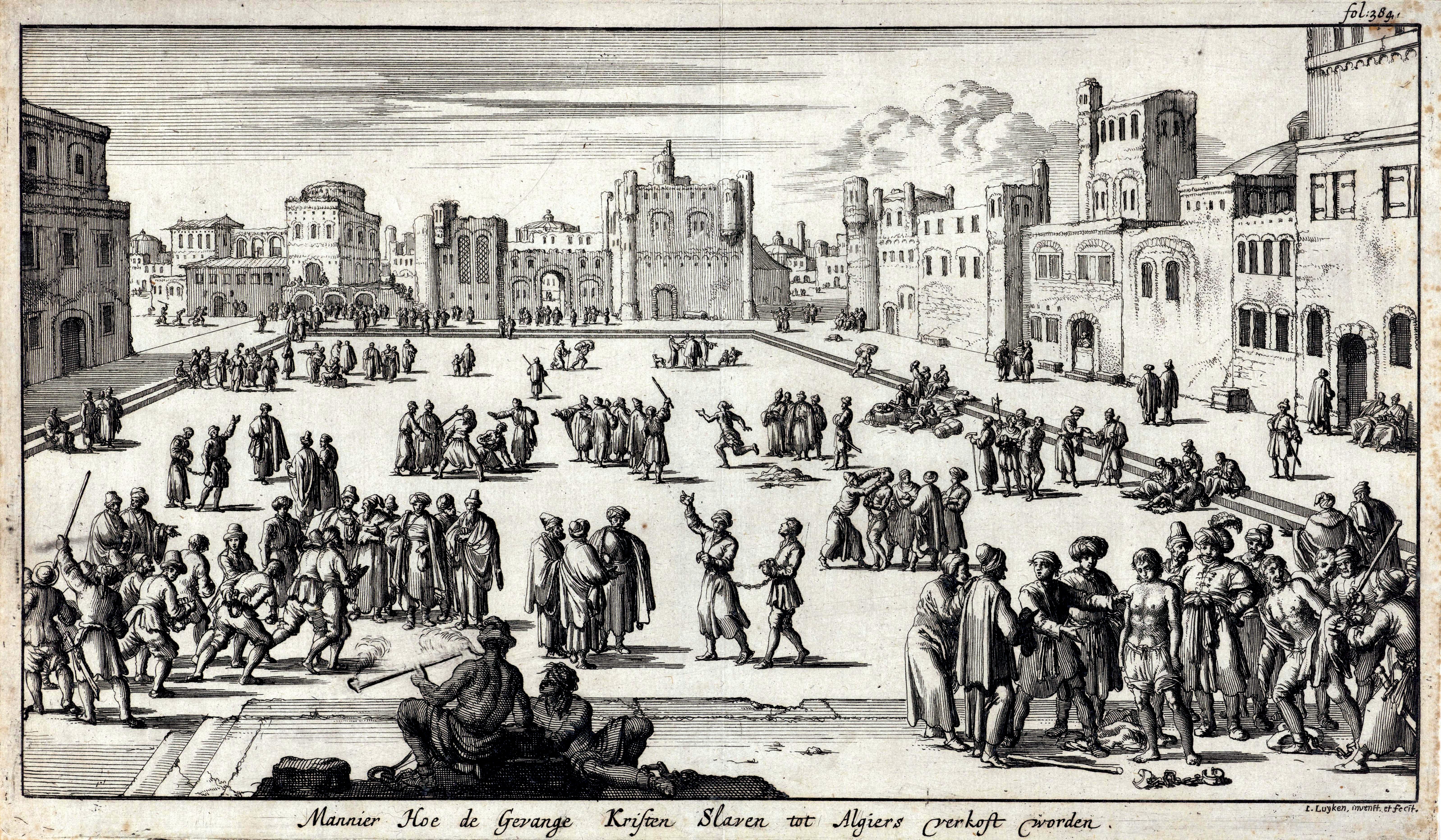
Algiers belonged to the Ottoman political world, although its corsair society possessed “considerable autonomy”, and Christian captives could be sold, put to work, held for ransom, or incorporated into households according to their circumstances.
Cervantes became one of them.
Slave market, Algiers
His captors believed he might be worth a lot of money because letters found on him made him appear more important than he actually was. This helped keep him alive while making his release more expensive.
But Cervantes had absolutely no intention of spending the rest of his life there…
He Tried to Escape Again and Again
He tried to escape. Then he tried again. And again. And again.
One attempt involved Cervantes and other captives hiding in a cave outside Algiers while waiting for a ship that was supposed to carry them back to Christian territory. The plan collapsed after betrayal, and Cervantes assumed full responsibility rather than snitching on his friends.
According to the sworn testimony recorded in the Información de Argel (October 1580), when the Turks were binding the group, Cervantes declared loudly so that both Turks and Moors could hear him:
“None of these Christians who are here are guilty in this business, because I alone have been the author of it and the one who induced them to flee.”
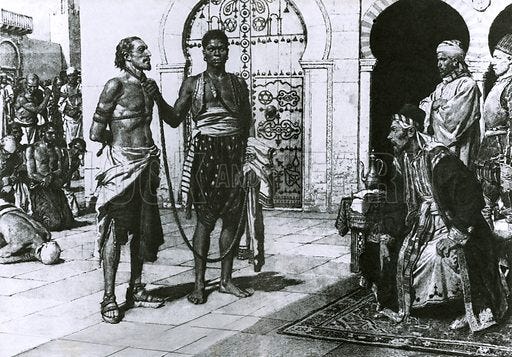
Taken alone before Hasan Pasha, he repeated that he alone was responsible and begged that any punishment fall only on him. Despite death threats, a rope placed around his neck, and hands bound behind his back as if for hanging, he refused to name any other Christian.
Another scheme involved trying to arrange a larger escape by sea.
That failed too. His captors eventually placed him under heavier confinement, recognizing that they had an unusually determined prisoner on their hands.